Guide · ChatGPT · Gemini · Google AI · New Zealand
Do ChatGPT, Gemini and Google AI recommend the same businesses?
We asked three AI tools the same local question on the same morning: “Who is the best plumber in Orewa?” Here are the real answers, screenshot for screenshot, and what the differences mean for any New Zealand business that wants to be named.
The short answer
No, not reliably. On 22 November 2026, ChatGPT and Google’s AI Mode both put the same plumber first, but Google added two names ChatGPT never mentioned. Gemini named four plumbers, and none of them appeared in either of the other answers. Each tool reads different sources and weighs them differently. The businesses named by all of them are the ones whose Google profile, reviews, directory listings and website all tell the same story.
We typed one question, “Who is the best plumber in Orewa?”, into ChatGPT, Google AI Mode and Gemini between 8:13am and 8:16am on Sunday 22 November 2026. We were logged out in a fresh browser with no search history, so each tool gave the answer a new customer would see. We didn’t ask follow-up questions or change the wording. Perplexity and Microsoft Copilot asked us to sign in before they would answer, so they’re not included.
We picked plumbers in Orewa because it’s a common, local, high-intent question. We’re not rating or recommending any of the businesses below. The names are shown exactly as each AI tool gave them.
What each AI tool said
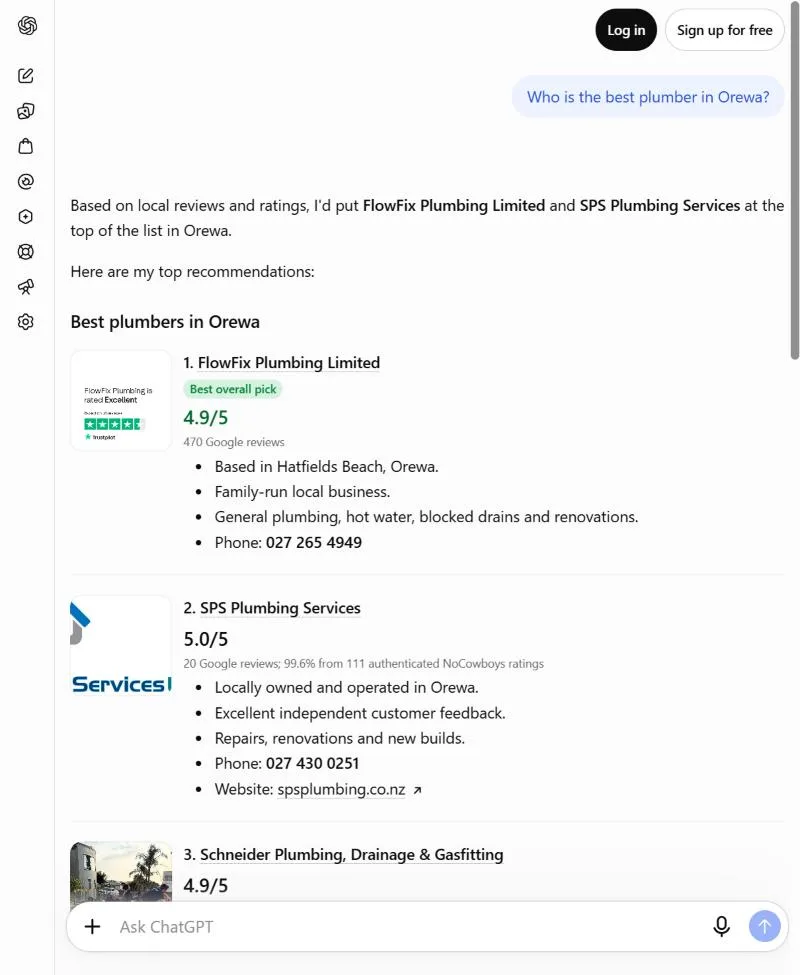
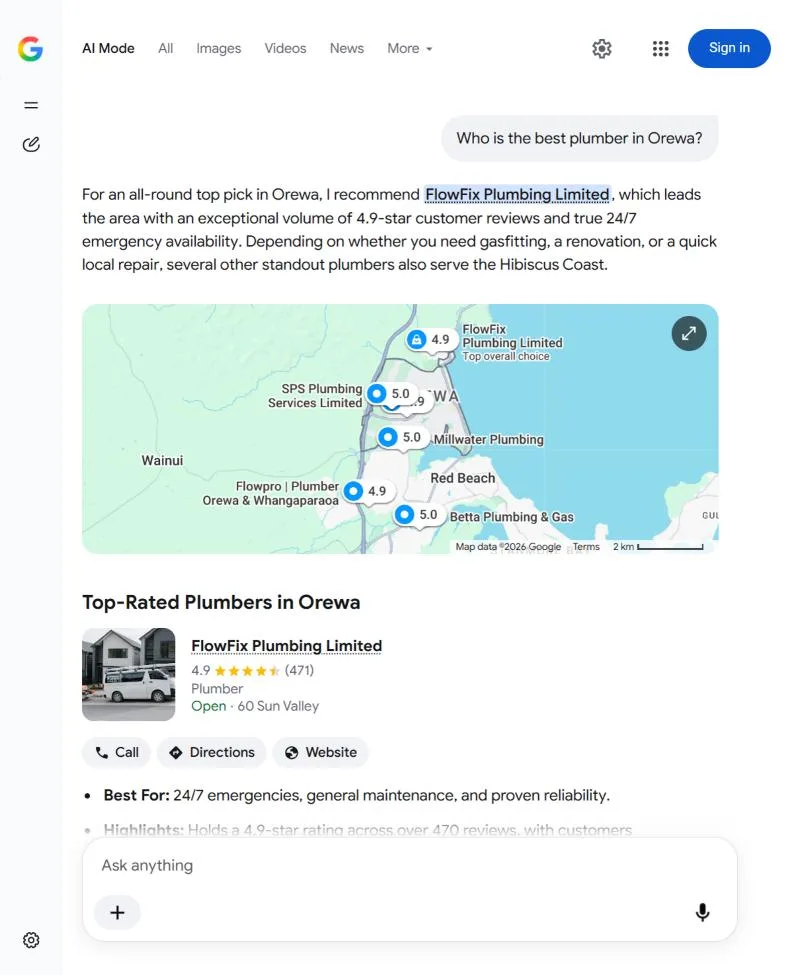
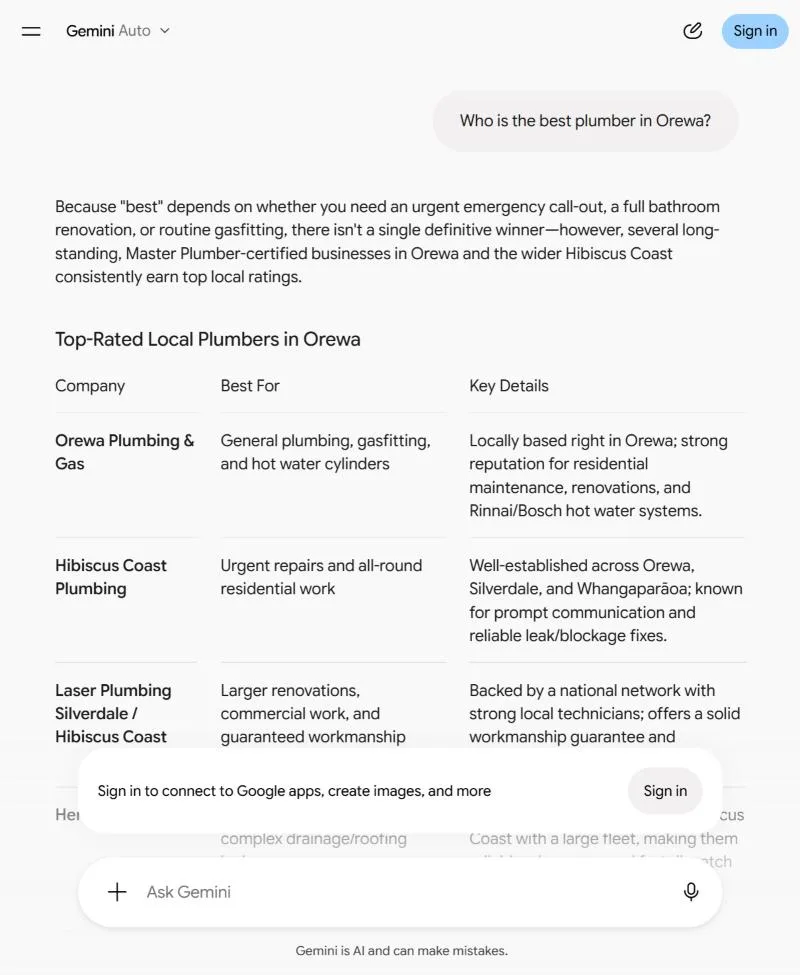
ChatGPTFour plumbers, with FlowFix Plumbing Limited as “best overall pick”, plus a map, Google review counts and NoCowboys ratings.Google AI ModeSix plumbers from Google Maps. Same top pick, plus Betta Plumbing & Gas and Millwater Plumbing, which ChatGPT didn’t mention.Gemini“There isn’t a single definitive winner”, then four different names, with no map, ratings or sources shown.
Every business ChatGPT named also appeared in Google’s answer. Gemini’s four names didn’t appear in either. Run the same question tomorrow, or signed in, or from another suburb, and you may well get a different list. That’s the point: there is no single “AI ranking” to be top of.
Why the AI tools disagree
Each assistant builds its answer from whatever sources it can reach at that moment, then decides which ones to trust. The screenshots show some of those sources directly:
Google AI Mode leaned on Google Maps. Every business in its answer came with a Google rating, review count and Business Profile buttons (Call, Directions, Website).
ChatGPT mixed several sources. It quoted Google review counts, a map, and for one plumber “99.6% from 111 authenticated NoCowboys ratings”, a New Zealand trades directory.
Gemini showed no sources. Logged out, it gave a table with no ratings, map or links, so there’s no way to see where its names came from.
The plumbers that appeared in both ChatGPT and Google had the same things in common: a Google Business Profile with plenty of reviews, a clear Orewa or Hibiscus Coast location, and consistent details across listings. That overlap is what AI looks for when it decides who to recommend.
Watch: the same question, three different answers
How to test your own business in 10 minutes
1. Write the question a customer would ask. Use their words, your service and your area: “Who’s the best electrician in Silverdale?”, not your business name.
2. Ask it logged out. Use a private browser window so your own history doesn’t shape the answer. Try ChatGPT, Gemini and Google AI Mode (the “AI Mode” tab on Google).
3. Screenshot and date every answer. Note who’s named, in what order, and any sources or ratings shown.
4. Look for the pattern. Who gets named in all three? Compare their Google profile, reviews and listings with yours.
5. Repeat monthly. AI answers move. One test is a snapshot, not a verdict.
The honest bit. Nobody can guarantee a business gets named by every AI tool, and nobody controls what Gemini or ChatGPT says. What you can control is whether the public facts about your business are complete, consistent and confirmed by other people. That’s what moves your odds in all of them at once.
They read different sources and weigh them differently. In our test, Google AI Mode built its list from Google Maps listings, ChatGPT combined Google review counts with a New Zealand trades directory, and Gemini’s logged-out answer showed no sources at all. A business with a strong, consistent footprint across all of those places is the one most likely to be named by more than one tool.
They can. The wording of the question, your location, whether you’re signed in, and updates to the AI model can all change the list. Our screenshots show one moment: the morning of 22 November 2026. Test a few times and keep dated screenshots so you can see the trend.
It can. Signed-in answers may use your past chats, searches or location. We tested logged out to see the generic answer a new customer is likely to get. If you test signed in, note that on your screenshots.
You don’t need to pick one. ChatGPT and Google’s AI features both drew on the same public footprint in our test: Google Business Profile details, reviews, directory listings and websites. Making those complete and consistent improves your chances across all of them, rather than chasing one tool.
Want to know what AI says about your business?
Tell us what you do and where. We’ll check what ChatGPT, Gemini and Google AI Mode say when your customers ask for what you do, and tell you what’s stopping you being named.